
Clogged swimming pool filters are a common maintenance issue. They lead to inconveniences, such as cloudy water, poor water circulation, and equipment damage, if they’re not corrected. Learning how to identify the cause and symptoms of this issue is a wonderful way to start restoring your pool’s water to a crystal-clear appearance.
Warning Signs Indicating a Clogged Filter
The best way to determine if a pool filter is clogged is to use a pressure gauge. If your pressure gauge reading is at 8 to 10 psi higher than the normal “clean” starting pressure, you probably have clogged filters.
Your water will begin to look cloudy or murky, too. As debris builds up on it, the filter loses its ability to trap small particles. This results in that hazy look.
Clogs also restrict water flow, which results in weak return jets. You’ll notice lower water pressure from your return wall fittings.
You should have to clean or backwash your pool filter only every few weeks. If you find yourself doing this every few days, the media are oversaturated with minerals and oils.
The Main Reasons for Frequent Clogging
Environmental debris plays a major role in clogged filters. High amounts of leaves, pollen, dust, and grass can quickly overwhelm the media in your pool’s filter.
Your pool filter also must deal with biological contaminants. Body oils, sunscreen, and algae blooms create a sticky residue that gums up your filter’s pores. This is especially true for cartridge or DE systems.
Also, high pH or calcium levels will lead to mineral scaling on your filter media. This can harden and block water flow.
Make sure you have the right-sized equipment. If your filter is too small for your pool’s volume, it will clog faster than a properly sized filter.
Solutions for Specific Filter Types
If you have sand filters, they need a backwash to flush out debris. If this doesn’t help, a deep cleaning with a chemical cleaner will be necessary. These filters also need to be replaced every three to five years.
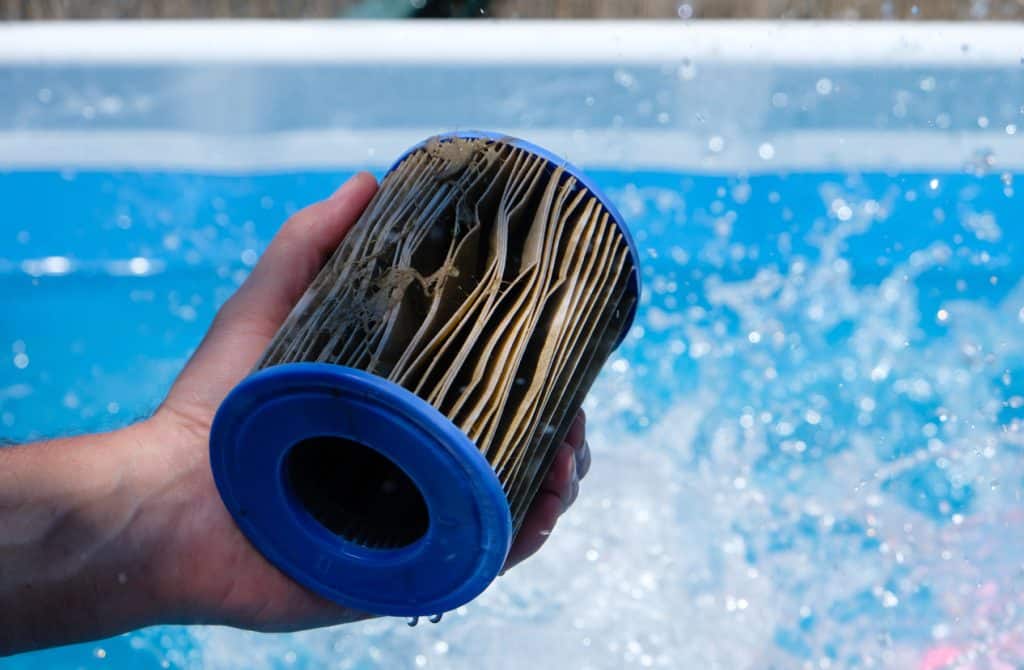
You need to remove cartridge filters and rinse them thoroughly. You can do this with a garden hose. If the clogs are stubborn, you can soak the filter in a cleaning solution. This will break down oils.
Diatomaceous earth (DE) filters require backwashing, and the powder needs to be replenished. If the pressure is still high after this maintenance, the internal grid may require a deep clean. You can accomplish this with a hose or an acid soak to eliminate scale.
You can use a pool cover to help keep debris out of your pool. Regular skimming helps, too.
While regular maintenance can prevent many issues, persistent high-pressure readings or recurring clogs are signs that you have a deeper problem in your filtration system. In these cases, professional inspection and service can get your system functioning optimally and prevent costly damage. You can find all the pool equipment and professional services you need by contacting Terry’s Pool Service in Tallahassee, FL.